
The "solar rebate" you've heard about is really a federal scheme called STCs — and there's now a separate battery discount too. Here's how both work in 2026, what they're worth, and why you'll likely never have to lift a finger to claim them.
The bigger the system in kW, the more certificates it earns. A 6.6 kW system earns roughly double a 3.3 kW one.
This is the one that's shrinking. The deeming period drops by one year every 1 January until the scheme ends in 2030. In 2026 there are four years left, so the same system earns fewer STCs than it would have last year.
Each STC represents one megawatt-hour of clean energy your system is expected to generate over its deeming period.
Australia is split into STC zones by sunshine. South Australia sits in a high-yield zone, so SA systems earn well.

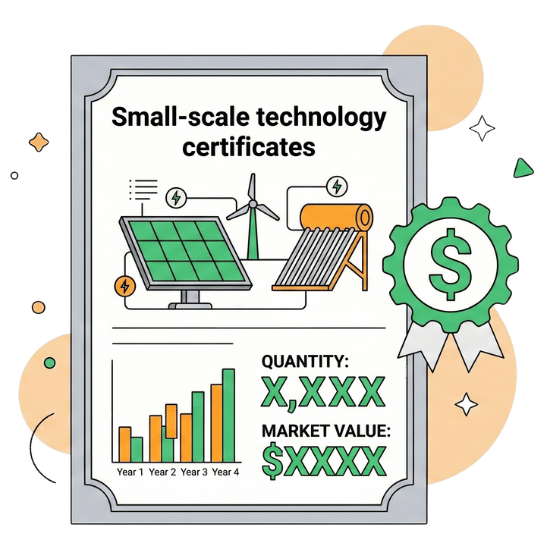
STC stands for Small-scale Technology Certificate, part of the federal Small-scale Renewable Energy Scheme. Despite the name "rebate", it isn't cash from the government — it's a tradeable certificate your system earns for the clean energy it's expected to generate. When you buy solar, you assign those certificates to your installer, who takes their value straight off your quote. So the rebate shows up as a discount, not a cheque.



Their ability to capture our brand essence and create visually stunning designs truly.

Their ability to capture our brand essence and create visually stunning designs truly.

I am extremely impressed with the results we achieved through their digital marketing services.
Their ability to capture our brand essence and create visually stunning designs truly.

I couldn't be happier with the solution. It has exceeded my expectations and made my life so much easier.
The analytics and reporting capabilities of our software have transformed our decision-making.

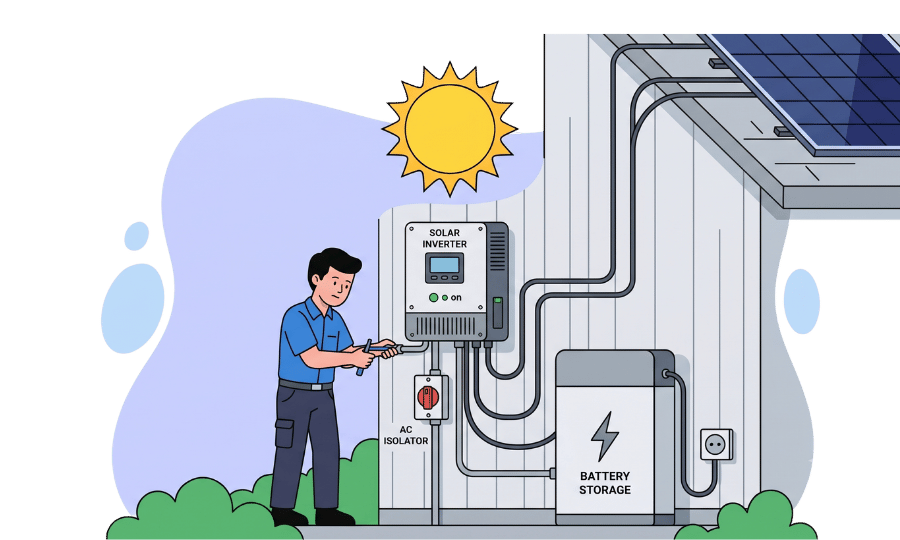
From 1 July 2025 the federal government extended the STC system to home batteries through the Cheaper Home Batteries Program. It takes roughly 30% off the upfront cost of an eligible battery, applied the same way — as a discount on your quote. From 1 May 2026 the discount tapers for larger batteries, so the best value sits in right-sizing rather than going as big as possible.




It's shrinking, not vanishing overnight. The deeming period drops each 1 January and the scheme ends at the end of 2030. Each year's delay means a slightly smaller discount, which is why installing sooner earns more.
The market price moves, but it generally sits in the high-$30s per certificate after costs. Your installer applies the live value on your quote, so the figure you're shown reflects the price on the day.
Yes. They're separate entitlements under the same scheme — solar panels earn STCs on generation, and an eligible battery earns its own STCs under the Cheaper Home Batteries Program. There's no income test on either federal scheme.
Almost never. In practice your accredited installer registers and trades the certificates for you and simply shows the saving as a discount on your quote. You can claim STCs yourself through the REC Registry if you'd rather, but it means not assigning the rights to your installer and handling the registration within 12 months of install. For nearly everyone, letting the installer do it is simpler and the discount is the same.
Find out which solar panels are right for your home, what it will cost, and how much you can save. Get in touch with our team today.