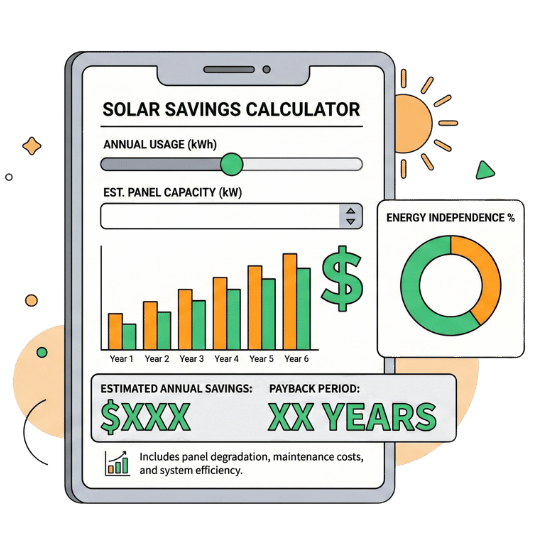
Everything a South Australian homeowner needs to know before going solar — how systems work, what they cost, the rebates you're entitled to, and the rules that protect you. Independent, and written in plain English.

Bigger isn't always better. The right system matches your actual usage and roof space. Most SA homes land between 6.6 kW and 13.2 kW. Our calculator gives you a starting point.
Spend where it counts. A quality inverter and a good install matter as much as the panel brand. Every product must be on the CEC approved list to qualify for STCs.
What you're paid for exported solar has fallen and varies by retailer. The bigger saving now comes from using your own solar, not exporting it — which is what makes batteries and load-shifting worth a look.
Get more than one quote, and check the installer is SAA-accredited. A trustworthy retailer puts the system design, warranty and STC discount in writing before you sign.
A rooftop system has three core parts: panels that turn sunlight into DC electricity, an inverter that converts it to the AC power your home uses, and a meter that measures what you use and what you send back to the grid. On a sunny day your panels power your home first; anything left over is exported. When the sun isn't shining, you draw from the grid — or from a battery, if you have one.



Their ability to capture our brand essence and create visually stunning designs truly.

Their ability to capture our brand essence and create visually stunning designs truly.

I am extremely impressed with the results we achieved through their digital marketing services.
Their ability to capture our brand essence and create visually stunning designs truly.

I couldn't be happier with the solution. It has exceeded my expectations and made my life so much easier.
The analytics and reporting capabilities of our software have transformed our decision-making.

Solar in Australia is tightly regulated, and that's good for buyers. Every grid-connected system must be installed by a Solar Accreditation Australia (SAA) accredited installer and built to the Australian Standards — AS/NZS 5033 for the panels, AS/NZS 4777 for the inverter, AS/NZS 3000 (the Wiring Rules) and, for batteries, AS/NZS 5139. On top of that, the Australian Consumer Law gives you guarantees that can't be signed away.


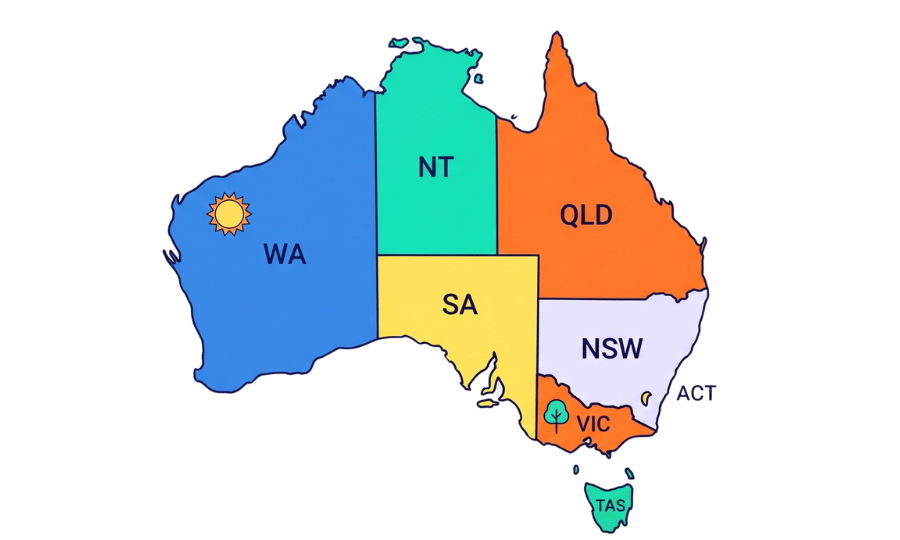


A typical 6.6 kW system runs to a few thousand dollars after the STC discount, depending on the components and the install. The honest answer is that it varies, so always compare written quotes side by side rather than going on a headline price.
Most SA households see a payback of around three to five years, depending on system size, how much power you use during daylight hours, and how much of your solar you use yourself rather than export.
Not necessarily. A battery increases how much of your own solar you use and can provide backup, and the federal Cheaper Home Batteries Program now takes around 30% off the upfront cost. Whether it pays off depends on your usage — see our STCs & Rebates page for the detail.
Check they're accredited by Solar Accreditation Australia (SAA), that the panels, inverter and any battery are on the CEC approved product lists, and that you receive a written contract, warranty and STC disclosure before you sign. A standard grid-connected system also shuts down during a blackout for safety — only a battery with backup capability keeps your home powered.